The Trouble with Harry

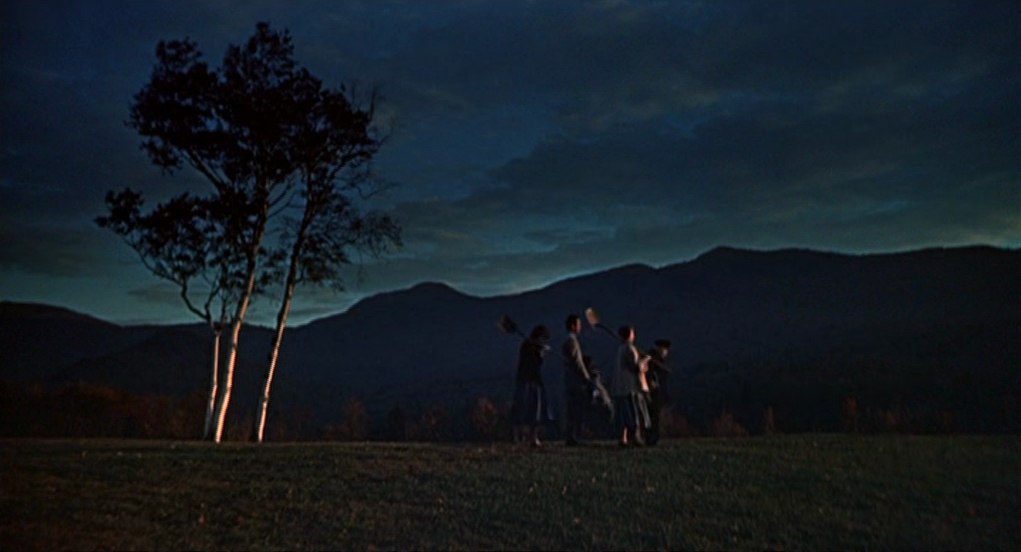
Unfairly dismissed as a film of minor pleasures, The Trouble with Harry is subtle and humble, but it’s also one of Alfred Hitchcock’s most assured, coherent pictures, and stands as his most full-bodied statement on the paradoxes of human nature.

Set in beatific, beautiful Vermont, Harry is a light comedy about how small-town charm can coexist with indifference towards violence. The charming and twisted opening scene, which stages the birth of a winter romance over a corpse (with one character casually stepping over the body as they go to make their exit) sets the tone.

Here, Hitchcock lavishes his attention on his characters’ idiosyncrasies (he may have famously referred to actors as cattle, but Hitchcock does love to revel in actorly mannerism as a cinematic effect unto itself). Every one of its protagonists are simultaneously sweet and mercenary: self-deprecating and generous and casually cruel and complicit in crime.

The policeman is cast as the story’s antagonist (Hitchcock claimed to fear policemen above everything). He’s as uncompassionate and arrogant and unlikable as our complicit band of small-town maybe-murderers are charming. It’s the band of small-town, accidental crooks who have our sympathy. Therein lies the joke. Murder only troubles us when we dislike the murderers.
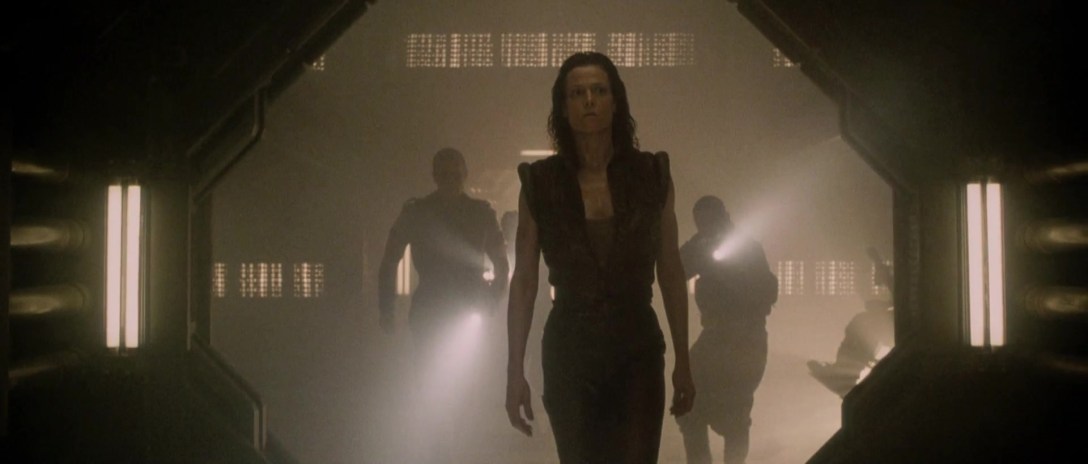
Alien Resurrection

The woefully misbegotten and mostly tedious Alien Resurrection has only one truly vivid, uncanny, destabilizing moment, and that is when Ellen Ripley (now resurrected as an alien-human hybrid clone after her sacrificial death at the end of Alien 3) encounters a room full of unsuccessful attempts at Ripley’s resurrection.

Thus Ripley’s sacrificial death led not to some dreamy heaven, but to another layer of the nightmare. This hall of half-human, half-alien horrors extend neatly from the biomechanical nightmares of the original Alien, and this moment of confrontation dramatizes what the prior trilogy of films had already signified: the alien eclipsed all of Ripley’s hopes and dreams, and now she has finally been remade in its terrifying image.

Neither director Jeunet (whose stylized, comic sensibilities jar with the material) nor the screenwriter, Whedon, properly capitalize on this profoundly unsettling turn for Ripley, which is a shame: it offered fertile ground for a series that had seemingly come full circle.

Weaver, constrained by the film, still finds the character within. She was and is, for all intents and purposes, the heart of the series because she can so uniquely express the bitter fortitude that can only be born in the furnace of great trauma. The first film may have been a haunted house movie driven by a sense of the ethereality of outer space, but both Aliens and Alien 3 found their momentum in Weaver’s face and the profound depths it suggests. No actress has ever recoiled in horror with more conviction.

The Big Lebowski

The Coens make better “termite” than “white elephant” pictures (to borrow Manny Farber’s useful, if nevertheless overworn and somewhat dubious, dichotomy). The Big Lebowski is the kind of towering work that achieves greatness through its own effortless oddball-ness, the sort that can only emerges when an artist (or, in this case, artists) are motivated primarily by their own idiosyncratic amusement.

A Gen X Long Goodbye, this hazy, somewhat wistful take on American idiocy and confusion by way of the Bush Sr. era of politics, offers a farcical take on Chandler in which America just doesn’t make sense, man. (Burn After Reading is its acid-tongued cousin, a spiritual successor linked to the next phase of the Bush political dynasty.)

Its facetious, but oddly resonant, thesis is that in stupid, cruel, criminal times, there needs to be a constant, something to stabilize the chaos: someone with minimal ambition who will kick back and bowl and drink a White Russian.

The brilliance of Lebowski lies less in what it says than in how it carries itself, which is with the same unimpeachable casual exuberance and weirdness that runs through Bridges’ central performance. It’s the equivalent of a night out at your favorite neighborhood dive bar (which is to say a night spent reveling while in the eye of the American storm).

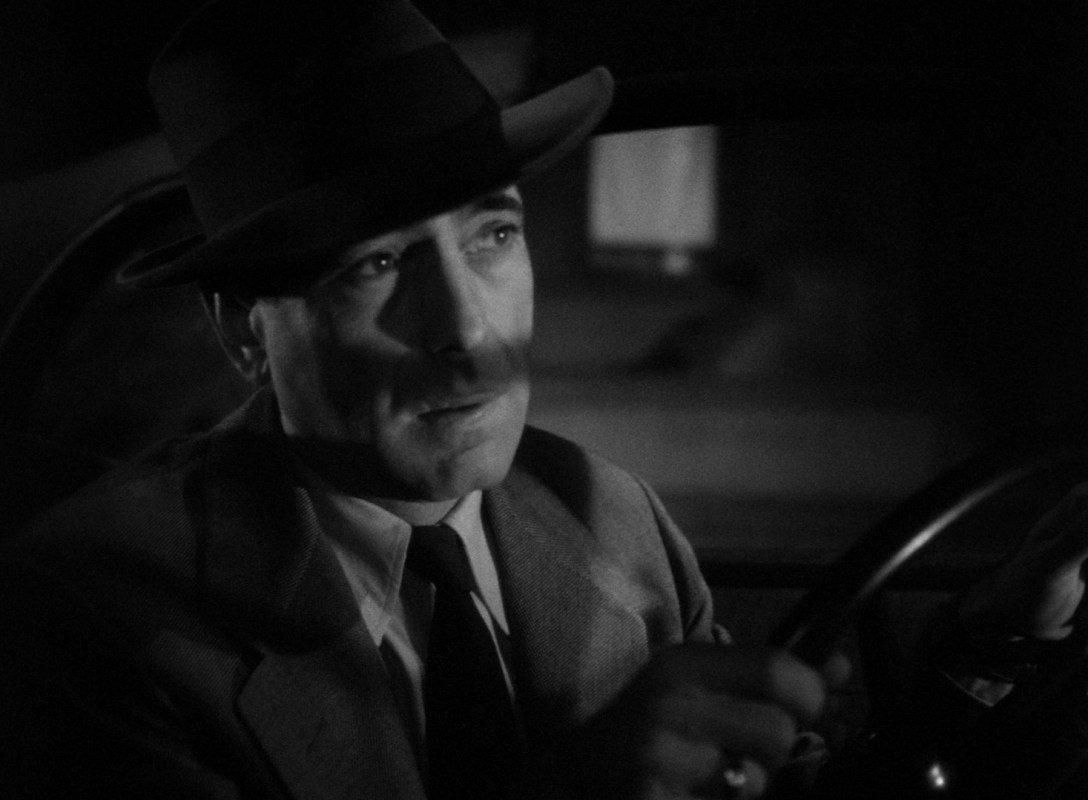
The Big Sleep

No cinematic Chandler adaptation has successfully channeled the same psychic forces that propel his Marlowe novels (in my estimation, the Mitchum-starring Farewell My Lovely comes closest, even if it gives us Chandler by way of Nathanael West). The Hawks adaptation of The Big Sleep keeps the narrative outlines, but it’s a Hollywood glamour vehicle (even if it has a seedy side).

Bogart excelled at conveying self-destructive psychology, so it’s a shame that Marlowe’s essential cynical loserdom isn’t in evidence. Here, he’s in charismatic heartthrob mode, a kind of James Bond P.I. Still, let’s not complain too much; Bogart is a joy to watch, especially when he shares the screen with Bacall.

Bacall comes from some other planet, a young dynamo that’s all desire and contempt and fortitude. If Gene Tierney was the ultimate self-destructive femme fatale, a woman who would inevitably combust in spectacular fashion, Bacall’s film noir women would survive everyone (including the men they loved).

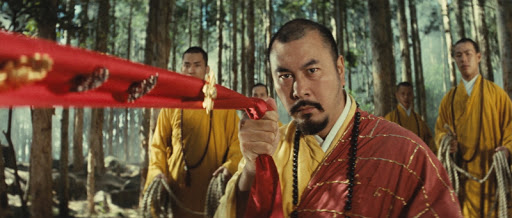
A Touch of Zen

King Hu’s great wuxia feature, A Touch of Zen, may be cinema’s greatest expression of human spirituality. Certainly, no other film has so perfectly embodied the concept of holiness with such force and such effortlessness.

Hu presents transcendence as both tangible and ineffable, all the while suggesting that it is profoundly effortless: to live a holy life is to live the most natural and sensible life.

“The sea of suffering is boundless. Arise and come ashore.”

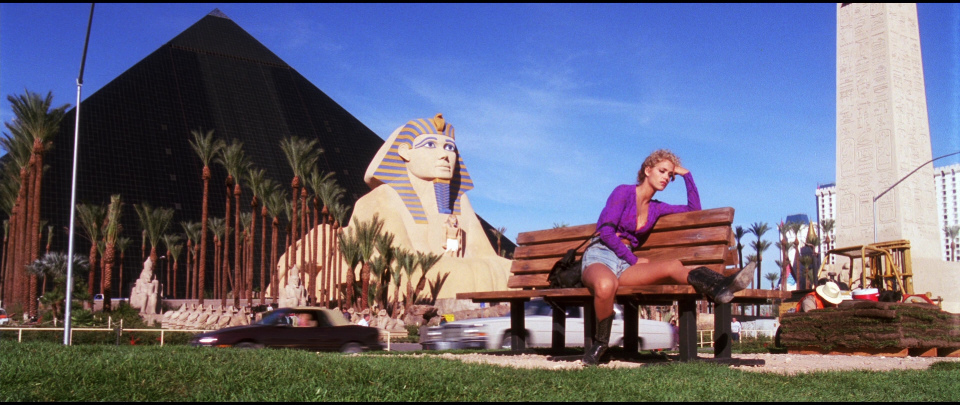
Showgirls

In Showgirls, some people become has-beens, some become grocery clerks, some become forgotten victims obscured by PR cover-ups, and some skip town and head for Los Angeles.

It’s a garish, vulgar, unsubtle epic, but it’s not senseless. It takes talent and chutzpah to make something this brazenly ridiculous, this unflinchingly earnest, and this strange. It’s a movie made for people who, like me, can laugh and cry at the same time.